
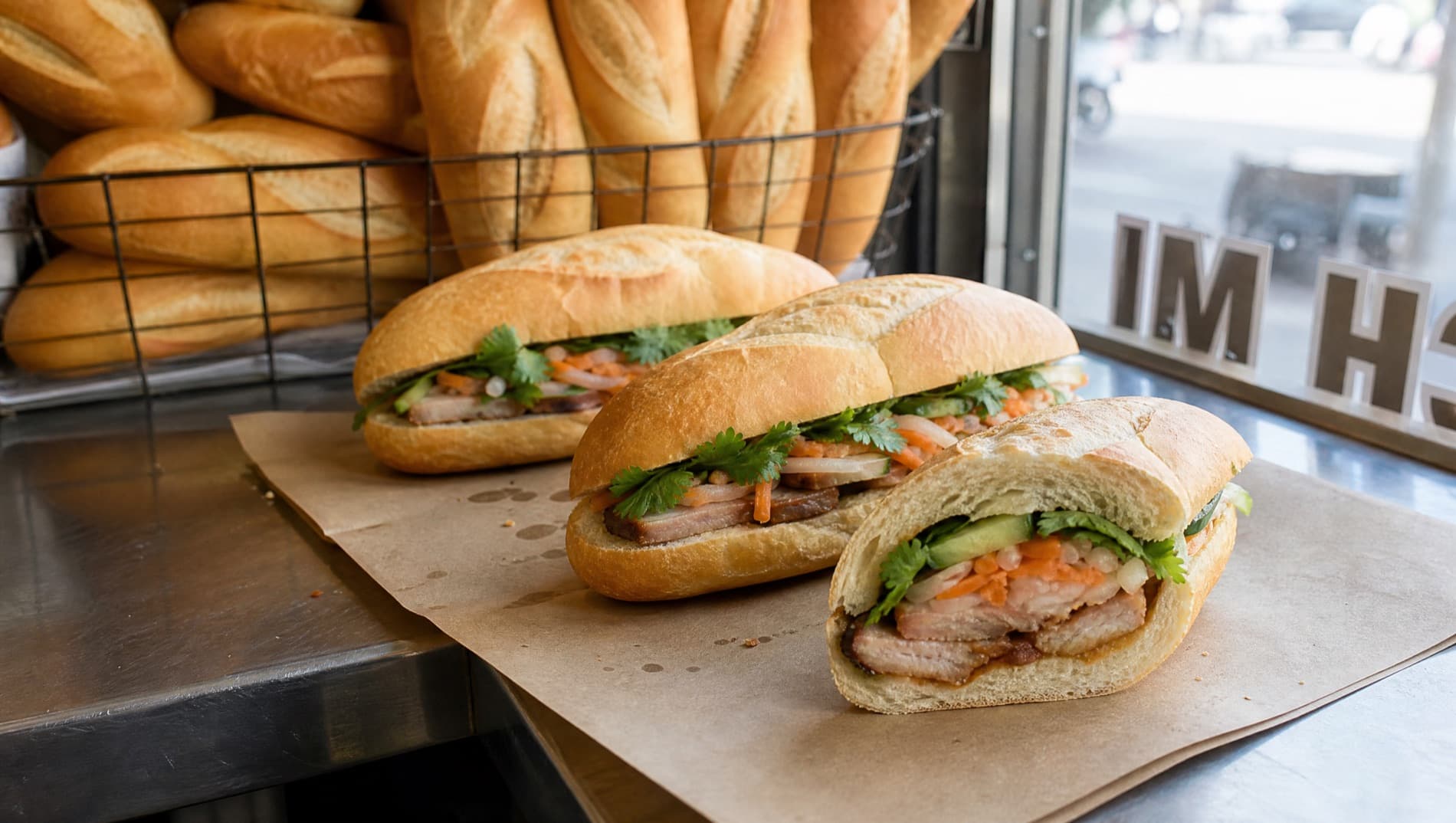
What it is
A bánh mì is a Vietnamese baguette — lighter and thinner-crusted than a French one because it is made with some rice flour — split and filled with pâté and butter, a protein, pickled carrot and daikon, cucumber, cilantro and chili. It is the most portable thing in the cuisine and the cheapest good lunch in most American cities.
What makes a good one
It is a bread problem before it is a filling problem. The crust should shatter and leave crumbs on the paper; the inside should be almost hollow. A bánh mì on dense, chewy, supermarket-style bread is a different and worse sandwich no matter what is inside it. Ask when the last bake came out — the answer tells you most of what you need to know. After that: the pickles should be sharp and freshly drained, not sitting in liquid, and there should be enough of them to cut the pâté.
Regional variation
Thịt nướng is grilled pork and the most common order. Chả lụa is a cool, mild pork roll. Xíu mại is meatballs in tomato sauce, served warm. Ốp la is a fried egg version, mostly eaten at breakfast. Chay is tofu, and at a bakery that makes its own pâté you should ask for it left off if you want it vegetarian.
Common questions
- Does bánh mì travel well?
- Better than almost anything else in the cuisine. The only risk is a long ride softening the crust, so restaurants on Beply can pack the bread and filling separately if you ask — the option is on the dish.
- Is bánh mì spicy?
- Only from the fresh jalapeño, which is added last and can be left off. The spice level control on each sandwich is calibrated by that specific kitchen.