
What it is
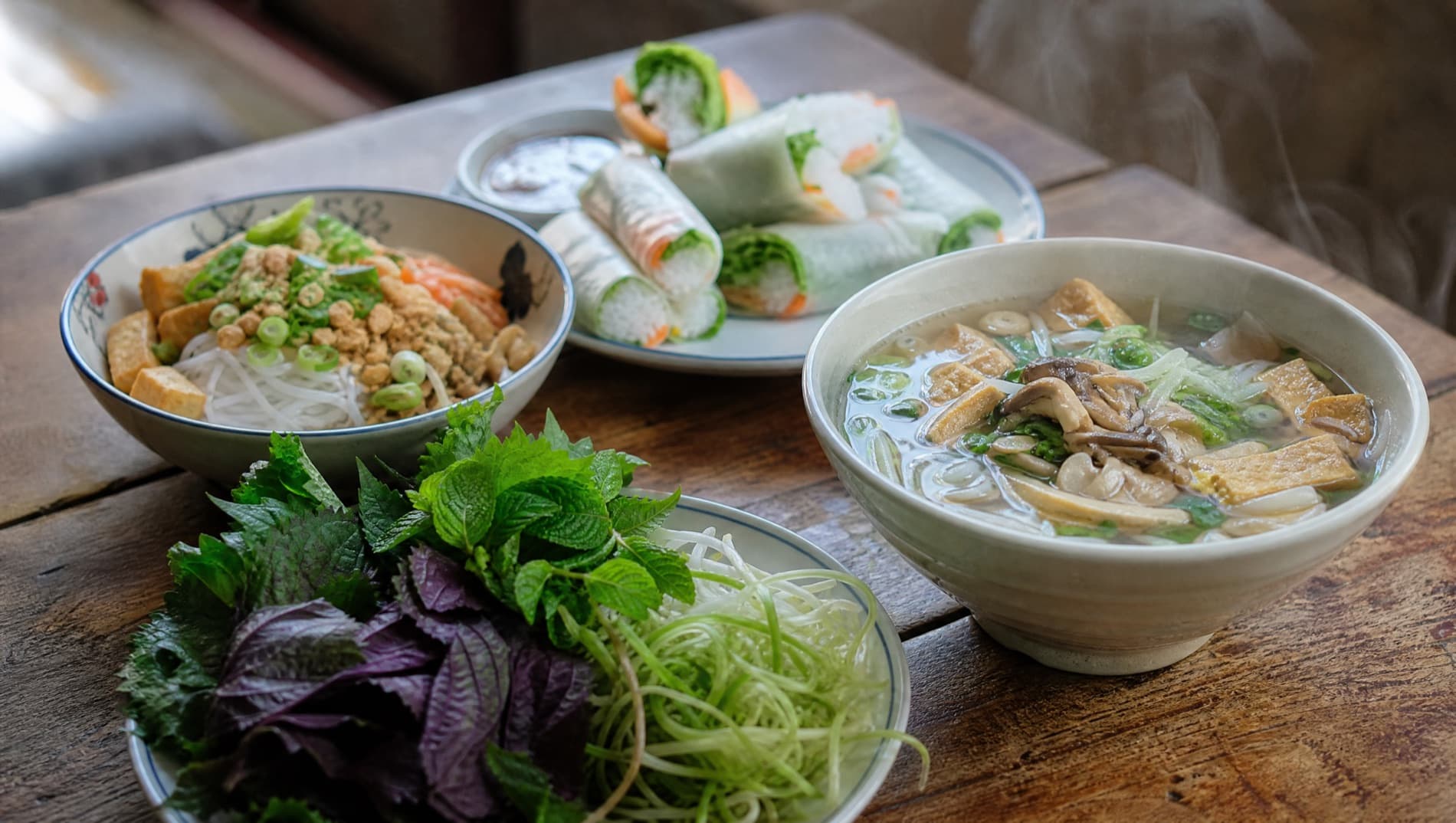
Gỏi cuốn are fresh rolls: softened rice paper wrapped around poached shrimp, sliced pork, vermicelli, lettuce and herbs, eaten cool with a peanut-hoisin dip. They are not fried, and they are not the same thing as chả giò, which are — the two are constantly conflated on English menus.
What makes a good one
The wrapper should be translucent enough to see the shrimp and tight enough that the roll does not fall apart when you dip it, without being tough. They should be made close to when you eat them; refrigeration turns rice paper hard and cloudy. A good roll has a full herb presence — mint and chives are doing real work here, not garnishing.
Regional variation
Southern rolls include pork and shrimp. Vegetarian versions swap in fried tofu. Bò bía is a related roll with Chinese sausage and dried shrimp, and is worth ordering if you see it.
Common questions
- What is the difference between gỏi cuốn and chả giò?
- Gỏi cuốn are fresh, cool and soft. Chả giò are wrapped and deep-fried until crisp. English menus often call both 'spring rolls', which is why we show both when you search for that phrase and label each one.
- Are they gluten-free?
- The rolls themselves generally have no gluten ingredients, but the hoisin in the dipping sauce often does. We label ingredients rather than certifying kitchens.